
How should a Jaipur day begin at 7:30?
Ask the driver to collect you at 7:30 AM from the hotel entrance, not merely from a neighbourhood pin. That early start is useful because the first leg goes north to Amer before heat and tour groups build. Keep breakfast simple, carry water, and have a light layer for the morning breeze on the hill. Send the operator any child-seat, wheelchair-folding or stroller requirements before the vehicle is assigned. A small party with day bags can travel in a sedan; a family carrying a stroller and several cases may prefer an Ertiga or Carens-class SUV. The day below is a sequence, not a promise that every site will take exactly the listed minutes. Ticket queues, roadworks and a special event can shift the rhythm, so agree on one optional stop to remove if time slips.
What fits between 8:15 and 11:00 at Amer?
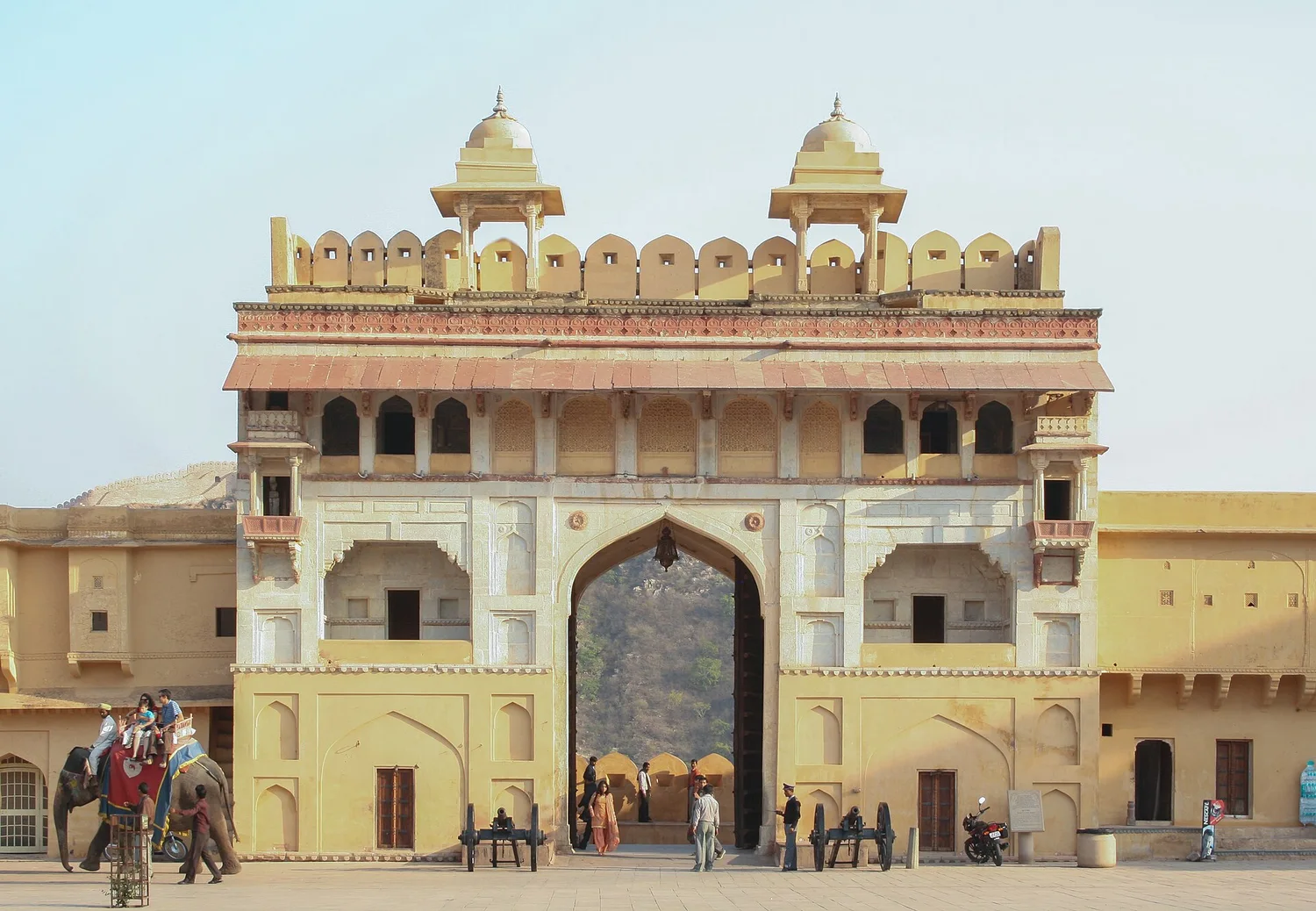
Use the first substantial block for Amer Fort, arriving around 8:15 AM if the city pickup is on time. Walk through the gates and courtyards at a measured pace: the climb, ramps and uneven stone floors make a rushed circuit tiring. Give yourself time for Ganesh Pol, the audience spaces and the mirrored interiors rather than treating every room as a photograph. Entry categories and hours are approximate; confirm the current ticket at the official counter, especially if you are comparing Indian and foreign visitor rates. A guide can explain how the palace connected defensive walls, water storage and royal rooms. The parking approach can be busy, so passengers should use the marked drop area and arrange a return meeting point before the driver moves the car. If the group includes someone who tires easily, keep the fort visit shorter and save a quiet seated break for later.
Why pause at Jal Mahal before the old city?
After Amer, travel back toward central Jaipur and allow a brief stop at the Man Sagar lakeside viewpoint. Jal Mahal is primarily admired from the shore; do not build the itinerary around an interior visit unless a current official notice confirms access. Twenty to thirty minutes is often enough for a view, photographs and a drink, while a longer pause depends on parking and lakeside rules. The fort road and the lakefront are separate experiences, even though they sit along the same northern corridor. Keep the car at a permitted lay-by and avoid standing in moving traffic to frame a picture. This stop gives children a chance to stretch after the fort walk, and the open view contrasts with the enclosed courtyards ahead. If congestion has eaten into the morning, make Jal Mahal a quick look rather than sacrificing the time reserved for City Palace or Jantar Mantar.
How can City Palace and Jantar Mantar share the afternoon?
Set aside roughly noon to 3:30 PM for the old-city pair, with lunch arranged around the entry windows. City Palace has courtyards and galleries that reward an unhurried visit; the ticket options and inclusions can change, so check the desk when you arrive. Jantar Mantar sits nearby and is an observatory of monumental instruments, not a conventional indoor museum. A guide or an explanatory sign helps visitors connect the geometry to timekeeping and celestial observations. Walking between the two is often easier than asking the car to move through crowded lanes. Bring a hat and water because much of the observatory is open to the sun. If your group is fascinated by one site, let the other become a short exterior pause rather than trying to “complete” both at speed. The full-day sightseeing circuit provides a useful starting framework for arranging these central stops.
Where does Hawa Mahal fit without blocking traffic?
Visit Hawa Mahal later in the afternoon as a street-side landmark and, if the group wants, an interior stop. The honeycomb façade faces a busy market road, so the taxi cannot simply wait beside the windows. Ask for a legal drop zone and agree on a collection lane before walking away. From outside, notice how the many small openings were designed to let air pass through the palace front; an interior visit takes longer and has its own entry arrangements. A short photo pause may take twenty minutes, while a ticketed visit requires a larger allowance. Do not expect the driver to find a space at the exact moment you finish; traffic controls in the walled city can shift access. Carry only what you need for the walk. The Hawa Mahal visitor page covers the façade and access notes if you want to plan that stop separately.
When should Bapu and Johari Bazaar be explored?
Give the markets a window before the sunset climb, but keep the shopping plan selective. Bapu Bazaar is known for textiles, footwear and souvenirs; Johari Bazaar has jewellery shops and busy lanes where pedestrians and two-wheelers share tight space. Ask the driver to park at an agreed outer point rather than circling the same block while you browse. Decide on a meeting time, keep purchases together and carry a small amount of cash while using secure payment methods for larger transactions. Shop hours vary by weekday and festival period, so do not assume every stall is open late. If bargaining is not part of your travel style, compare a few shops and choose a clearly priced item instead of stretching the stop. A group that wants more market time can drop Nahargarh, but visitors seeking the city panorama should leave the bazaars before dusk traffic becomes slow.
How can Nahargarh become the day’s final view?
Leave the market area with enough daylight to reach Nahargarh Fort and the ridge viewpoint before sunset. The hill road winds above the city, and the final approach can slow around popular evening hours. Have the driver enter the approved parking lane; never request a pause on a blind bend. The view across Jaipur is the reward, but the fort complex has separate gates, ticket rules and walking distances. Entry and closing information are approximate until confirmed locally, and sunset timing changes through the year. A quick viewpoint visit may be enough after a long day; a museum or restaurant stop needs extra time and should be planned before the car leaves the city. Carry a light jacket in cooler months and keep children close around walls and steps. If the party is tired, prioritize the public viewpoint over attempting every interior attraction.
What changes in a hot-weather version?
From late spring into the early monsoon, shift exertion earlier and keep the afternoon sheltered. Start at the fort as planned, but shorten exposed walks and use a longer lunch break near the old city. Move Jantar Mantar to a cooler morning on another day if the group is sensitive to direct sun; the instruments have limited shade. Carry oral rehydration supplies, refill water at reliable stops and never leave a child in a parked vehicle. If a summer storm develops, ask the driver to pause in a safe covered place rather than taking a shortcut through a waterlogged lane. Nahargarh can remain the last stop only if roads and visibility are comfortable. An alternate finish is Albert Hall Museum or a hotel rest, followed by a separate evening transfer. A flexible car booking is more useful than a rigid minute-by-minute route when heat alters everyone’s pace.
Who benefits from a private car for this route?
A private vehicle helps when your group has limited time, needs a hotel pickup, or wants to adjust the order after seeing the queues. The published half-day and full-day sightseeing amounts begin at ₹1,500 and ₹2,200 approx. respectively; verify the package duration, kilometre limit and selected car before confirming. Tickets, meals and optional guides are separate unless written into the booking. Sedan luggage capacity is modest, while an SUV provides extra room for a family and day bags; a larger party may ask about a Tempo Traveller. The local sightseeing cab service can clarify pickup, waiting and overtime terms. Share the hotel address, passenger count, mobility needs and preferred finish time so the operator can recommend a practical vehicle rather than guessing from the word “family.”